 |
In any organization there is always wasted effort. There is always busy work.
|
130 |
 |
Most organizations enable our dysfunctional behaviors and even encourage them through policies, practices, reward systems and cultural messages that serve to drain our energy and run down our value over time.
|
010 |
 |
An increasing number of organizations pay lip service to the notion that ‘people are our greatest asset.’
|
010 |
 |
Building intermittent breaks into the workday is not only counterintuitive, it’s also countercultural in the vast majority of organizations.
|
069 |
 |
Because our core need for value is so rarely acknowledged or addressed in most organizations, we typically try to keep this hunger under warps and invisible at work.
|
143 |
 |
Because gestures of appreciation are so rare in most organizations, a little goes a long way.
|
167 |
 |
Not even the best-run organizations can avoid challenges, conflict, and stress, especially in tough economic times. But leaders at all levels can profoundly influence the way an organization responds…
|
170 |
 |
In most organizations, the expectation of instantaneous responsiveness pushes everyone into reactive mode, making it difficult to stick to any agenda.
|
221 |
 |
Any organization that fails to build a robust learning program… ought to expect that its people won’t get better at their jobs over time and may well get worse.
|
228 |
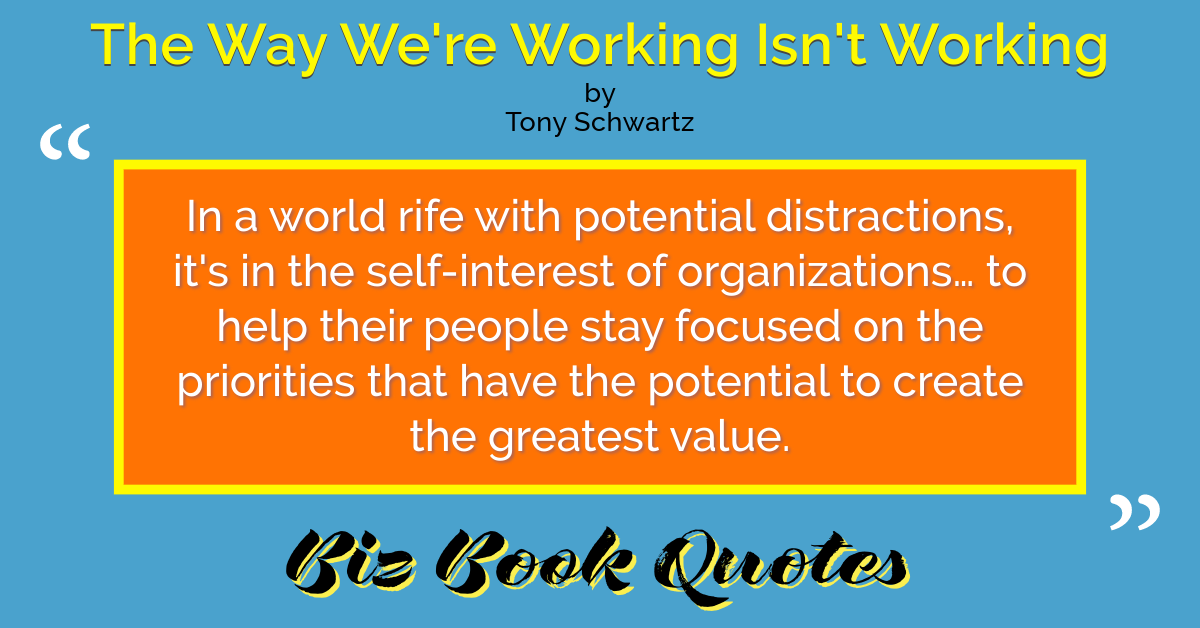 |
In a world rife with potential distractions, it’s in the self-interest of organizations… to help their people stay focused on the priorities that have the potential to create the greatest value.
|
232 |