 |
To maximize our effectiveness as leaders, it’s time to give up second guessing what peoples’ brains need, and become masters of helping others think for themselves.
|
27 |
 |
Quiet Leaders… listen to people as though they have all the tools they need to be successful, and could simply benefit from exploring their thoughts and ideas out loud.
|
76 |
 |
We need to be the guide standing on a platform above the trees, who can see the qualities of the forest itself, notice the pathways, and therefore help our people find their way through.
|
80 |
 |
Quiet Leaders give less advice than almost anyone else on the planet.
|
126 |
 |
Quiet Leaders don’t rush people into action. They focus on allowing people’s thinking to take its natural course.
|
129 |
 |
Giving feedback is also one of the more difficult conversations leaders must have, one with the most potential for things to go wrong.
|
203 |
 |
When people underperform, venting your emotions as a leader is unlikely to do anything to improve their performance.
|
215 |
 |
The role of a team leader is to facilitate the team’s thinking… However, it has to be the team doing the thinking, not the leader.
|
217 |
 |
The job of the leader is to bring the team together… by getting them to think in the most efficient and effective ways, by improving all their thinking – without telling anyone what to do.
|
222 |
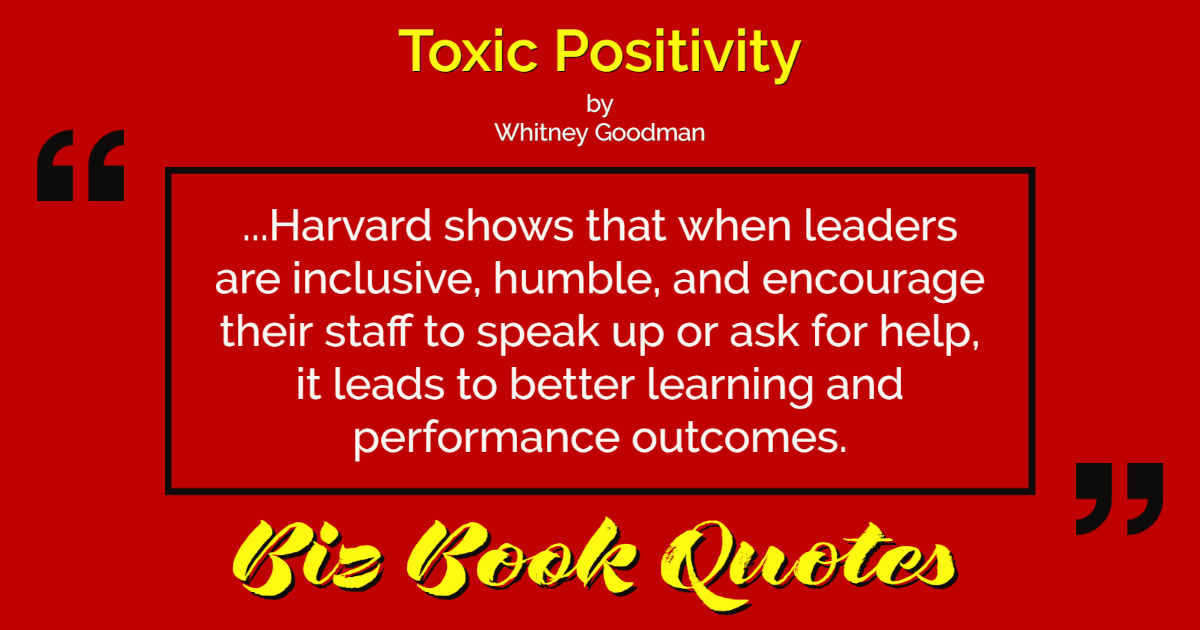 |
…Harvard shows that when leaders are inclusive, humble, and encourage their staff to speak up or ask for help, it leads to better learning and performance outcomes.
|
57 |