 |
Our emotional state is largely determined by what we attend to, and we are normally focused on our current activity and immediate environment.
|
394 |
 |
Most of us vastly underestimate the size and scope of the emotional needs we bring to the office.
|
004 |
 |
…the future of work is emotional. No scripts exist for our most difficult professional interactions.
|
007 |
 |
…real achievement at work requires going one step beyond emotional intelligence: you need to learn to be reasonably emotional.
|
010 |
 |
Personal relationships help you maintain a healthy emotional distance from your job – and keep you happy.
|
029 |
 |
…a range of studies show that the best judgment and problem solving incorporates emotion. In fact, if emotion is entirely ignored in the decision-making equation, the results can be surprisingly harmful.
|
080 |
 |
The simplest way to prevent irrelevant emotions from marauding through your life is to let time pass before making a decision.
|
088 |
 |
The problem with relying on emotion in hiring decisions is that we end up hiring people who make us feel good.
|
092 |
 |
Your feelings aren’t facts. Effective communication depends on our ability to talk about emotions without getting emotional.
|
138 |
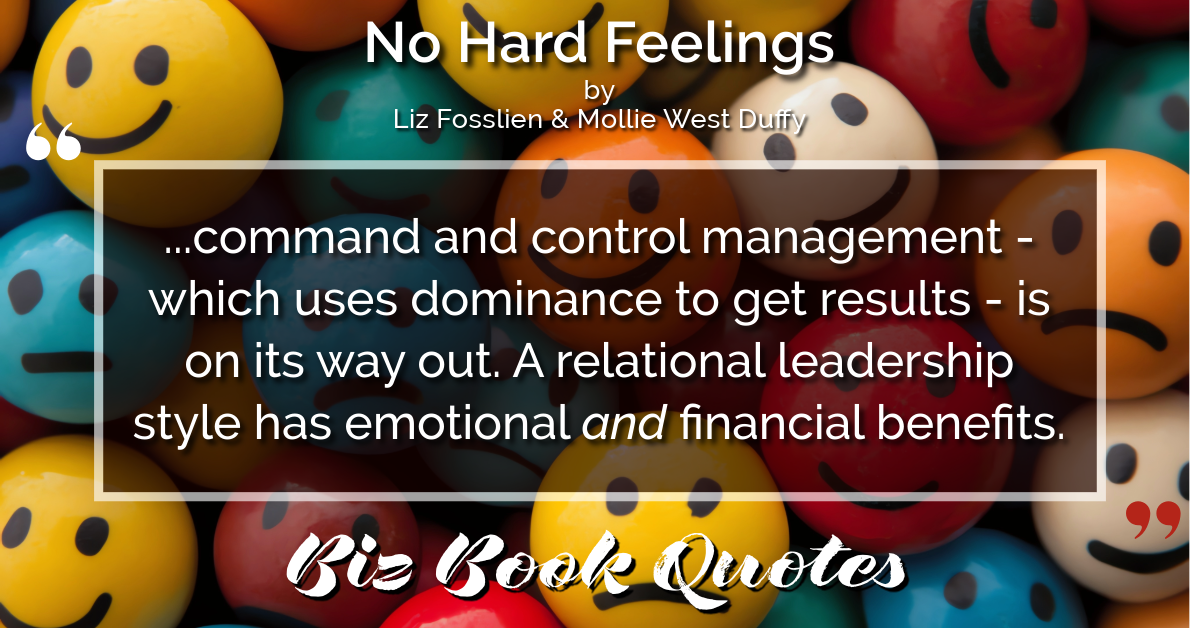 |
…command and control management – which uses dominance to get results – is on its way out. A relational leadership style has emotional and financial benefits.
|
208 |