 |
For an organization to work, leaders must cultivate habits that both create a real and balanced peace and, paradoxically, make it absolutely clear who’s in charge.
|
166 |
 |
During turmoil, organizational habits become malleable enough to both assign responsibility and create a more equitable balance of power.
|
175 |
 |
Good leaders seize crises to remake organizational habits.
|
178 |
 |
…a pillar of modern marketing theory: People’s buying habits are more likely to change when they go through a major life event.
|
191 |
 |
If you dress a new something in old habits, it’s easier for the public to accept it.
|
210 |
 |
To market a new habit – be it groceries or aerobics – you must understand how to make the move seem familiar.
|
212 |
 |
…the surest way to achieve… is to give people new habits that help them figure out where to go on their own.
|
239 |
 |
Movements don’t emerge because everyone suddenly decides to face the same direction at once.
|
244 |
 |
…habits – even once they are rooted in our minds – aren’t destiny.
|
270 |
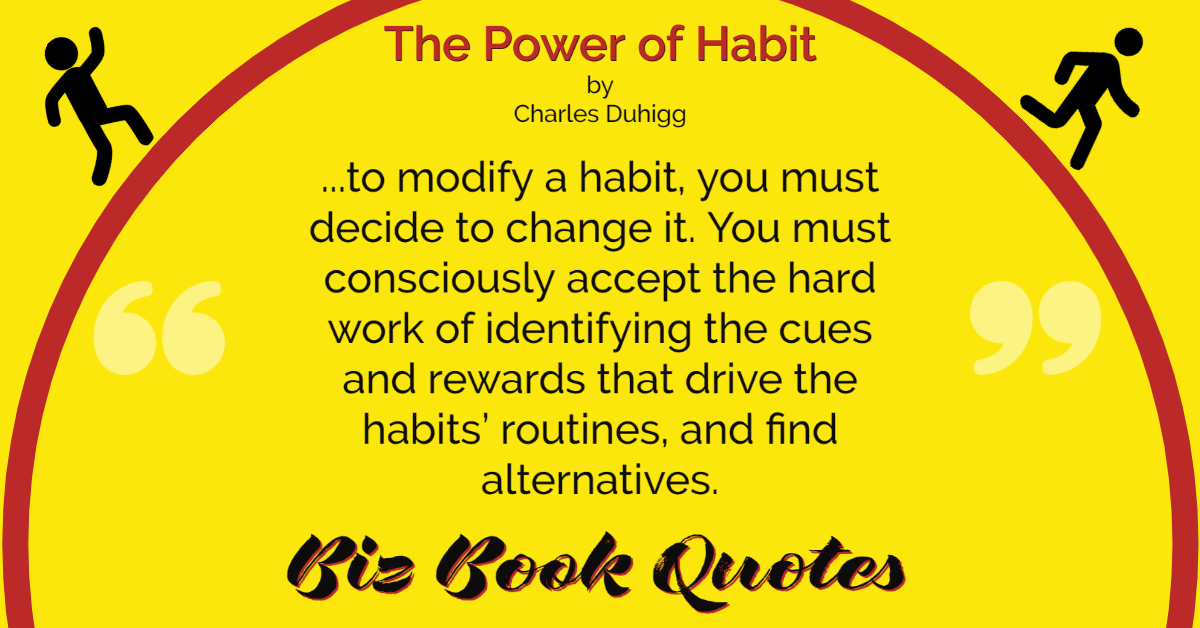 |
…to modify a habit, you must decide to change it. You must consciously accept the hard work of identifying the cues and rewards that drive the habits’ routines, and find alternatives.
|
270 |