 |
…for most people, the cause of a mistake matters.
|
229 |
 |
…people often (but not always) take on risky projects because they are overly optimistic about the odds they face.
|
253 |
 |
…the financial benefits of self-employment are mediocre: given the same qualifications, people achieve higher average returns by selling their skills to employers than by setting out on their own.
|
257 |
 |
…people tend to be overly optimistic about their relative standing on any activity in which they do moderately well.
|
260 |
 |
…the emotional, cognitive, and social factors that support exaggerated optimism are a heady brew, which sometimes leads people to take risks that they would avoid if they knew the odds.
|
263 |
 |
Unfairly imposing losses on people can be risky if the victims are in a position to retaliate.
|
308 |
 |
The power of format creates opportunities for manipulation, which people with an axe to grind know how to exploit.
|
330 |
 |
…people tend to be risk averse in the domain of gains and risk seeking in the domain of losses.
|
334 |
 |
The sunk-cost fallacy keeps people for too long in poor jobs, unhappy marriages, and unpromising research projects.
|
346 |
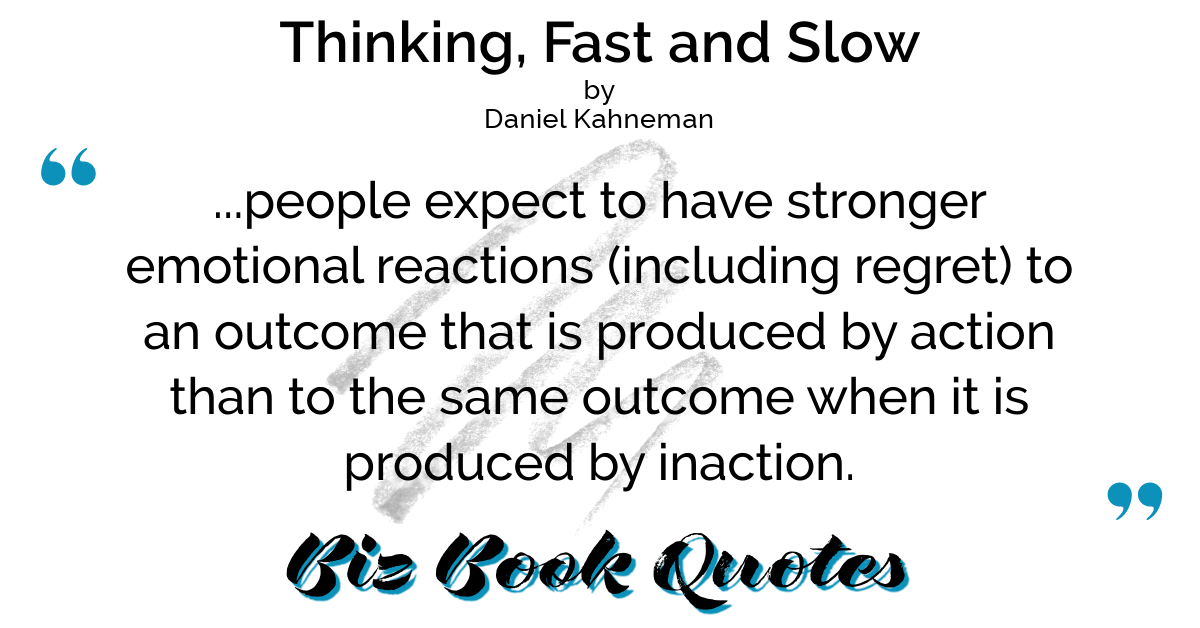 |
…people expect to have stronger emotional reactions (including regret) to an outcome that is produced by action than to the same outcome when it is produced by inaction.
|
348 |