|
We’re engaged by situations in which we see our actions modify subsequent results.
|
006 |
 |
As the leader of the organization, you are responsible for results, and results are the product of a culture of execution.
|
067 |
 |
With the exception of sales people, who either deliver their numbers or don’t, most people are judged by a mixture of results and time spent in the office.
|
014 |
 |
When we judge one another… we’re championing a system that distracts us from what really matters (results) and focuses our energy on what doesn’t (time and place).
|
031 |
 |
Work culture makes people do and say things that don’t drive results.
|
061 |
 |
If you get results, then anything else you do with your time is completely up to you.
|
067 |
 |
Ask yourself what needs to get done. If you’re focused on the results and achieving them then your time is your own.
|
072 |
 |
Everything boils down to results and so managers have some control over what the results are going to be. But the employees don’t need to be controlled as much as they used to.
|
112 |
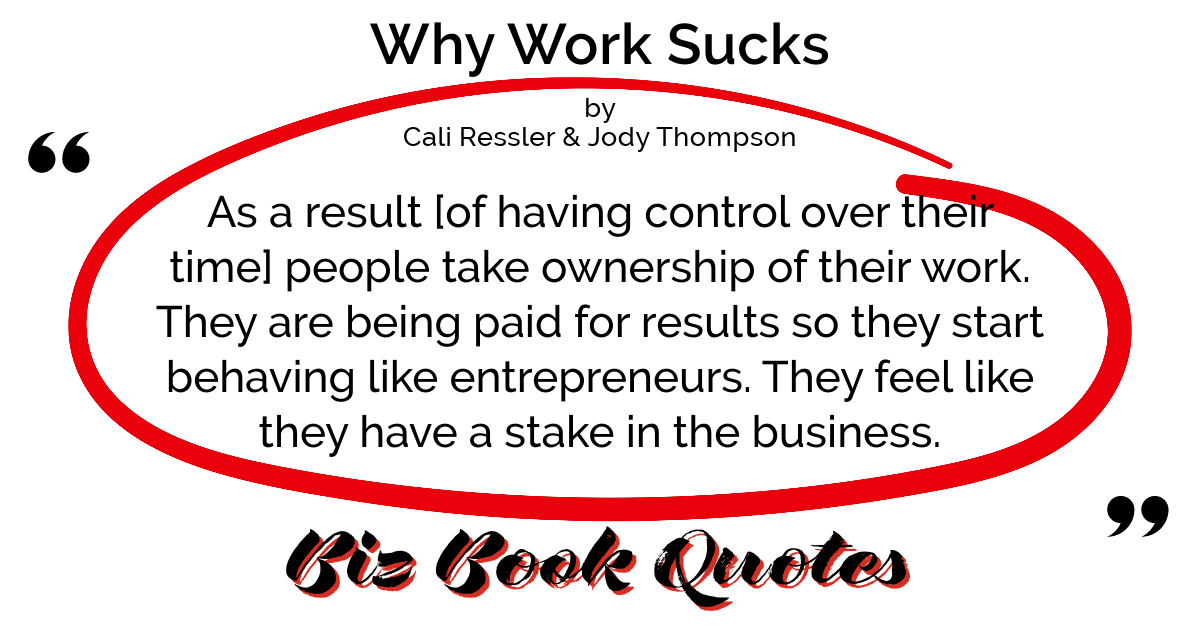 |
As a result [of having control over their time] people take ownership of their work. They are being paid for results so they start behaving like entrepreneurs. They feel like they have a stake in the business.
|
122 |
 |
One of the ironies of a Results-only Work Environment is that when people have less time with one another they make those interactions more purposeful and meaningful.
|
125 |