 |
The primary purpose of the organizational hierarchy in a company is decision-making efficiency.
|
216 |
 |
From the definition of its mission and purpose, a business must derive objectives in a number of key areas, and it must balance these objectives against each other and against the competing demands of today and tomorrow.
|
083 |
 |
Without systematic and purposeful abandonment, an organization will be overtaken by events. It will squander its best resources on things it should enver have been doing or should no longer do.
|
092 |
 |
…profitability is, not the purpose of, but a limiting factor on business enterprise and business activity.
|
097 |
 |
There is only one valid definition of business purpose: to create a customer.
|
098 |
 |
That business purpose and business mission are so rarely given adequate thought is perhaps the most important single cause of business frustration and business failure.
|
101 |
 |
With respect to the definition of business purpose and mission, there is only one such focus, one starting point. It is the customer. The customer defines the business.
|
101 |
 |
Defining the purpose and mission of the business is difficult, painful, and risky. But it alone enables a business to set objectives, to develop strategies, to concentrate its resources, and to go to work.
|
104 |
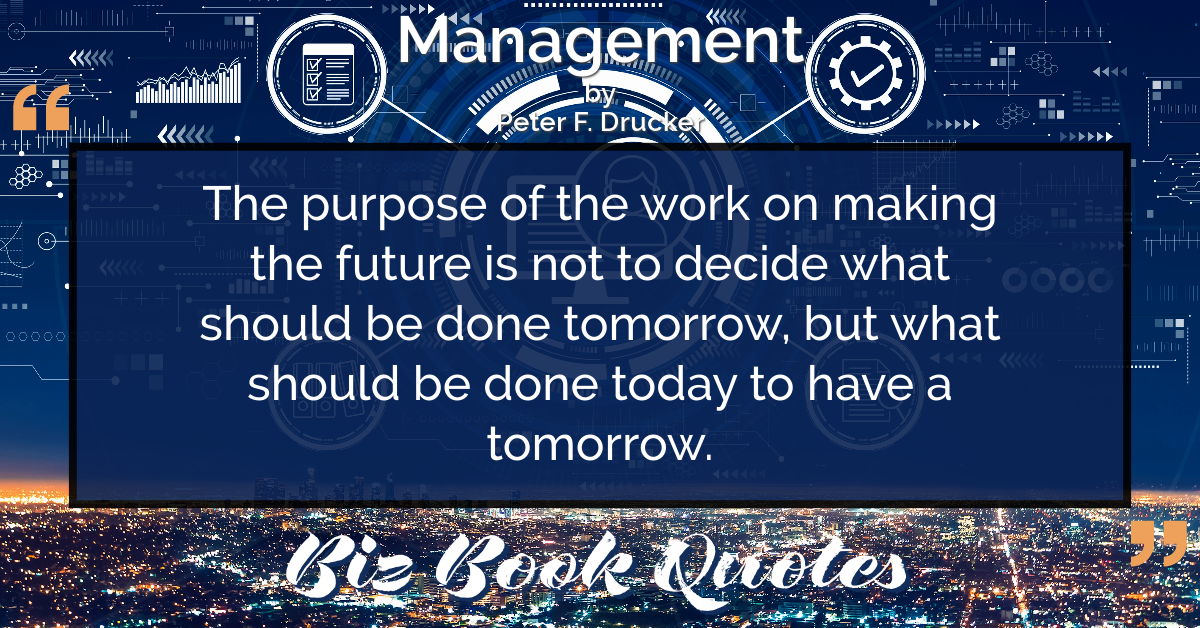 |
The purpose of the work on making the future is not to decide what should be done tomorrow, but what should be done today to have a tomorrow.
|
113 |
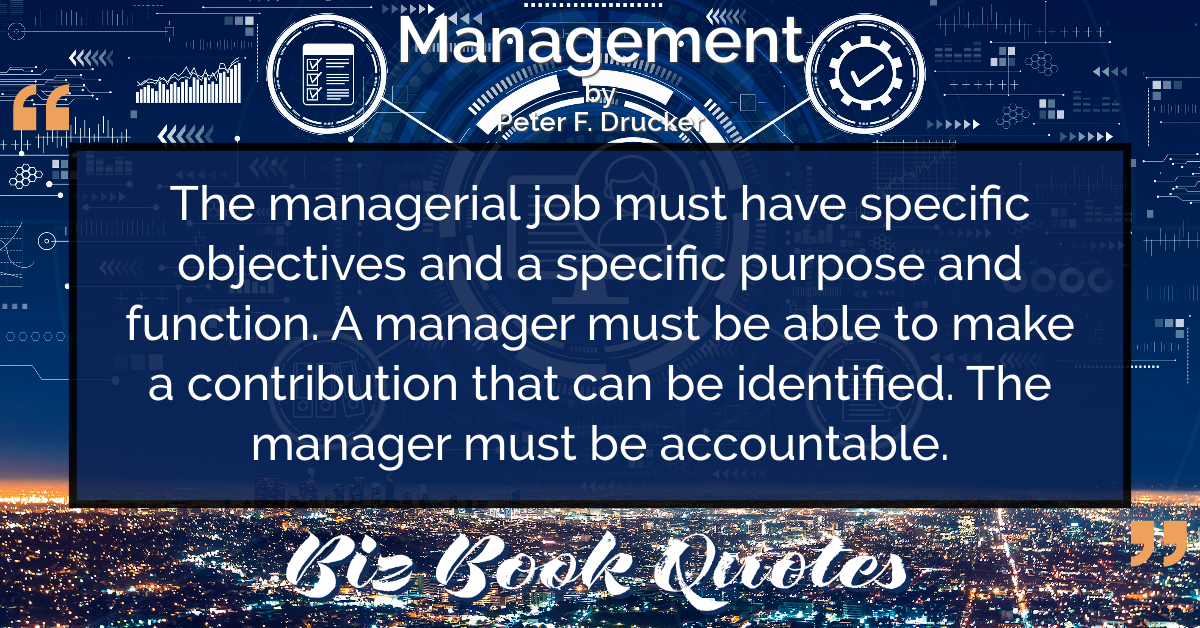 |
The managerial job must have specific objectives and a specific purpose and function. A manager must be able to make a contribution that can be identified. The manager must be accountable.
|
241 |