|
With the exception of sales people, who either deliver their numbers or don’t, most people are judged by a mixture of results and time spent in the office.
|
014 |
 |
When we judge one another… we’re championing a system that distracts us from what really matters (results) and focuses our energy on what doesn’t (time and place).
|
031 |
 |
If you were judged and paid based on what you actually contributed to your organization, then time and place wouldn’t be a factor.
|
054 |
 |
If you take away people’s ability to judge themselves and others based on time, then it’s harder for beliefs about work to be used as a measure for performance.
|
055 |
 |
You’re going to judge people, so judge them on their performance, on their ability to meet goals. Take time and place out of the equation.
|
056 |
 |
So if people aren’t judging you then what happens? You make sure that you’re getting your job done. Because if you’re not you’re in big trouble. You’re really going to stand out.
|
144 |
 |
…having people not judge your use of your time and only judge your accomplishments is an amazingly liberating feeling.
|
144 |
 |
Vision, inspiration, empathy, trustworthiness are manifestations of a leader’s judgment and character.
|
133 |
 |
Don’t immediately judge. Wait until you have enough to work with. This goes for judging others and judging yourself.
|
203 |
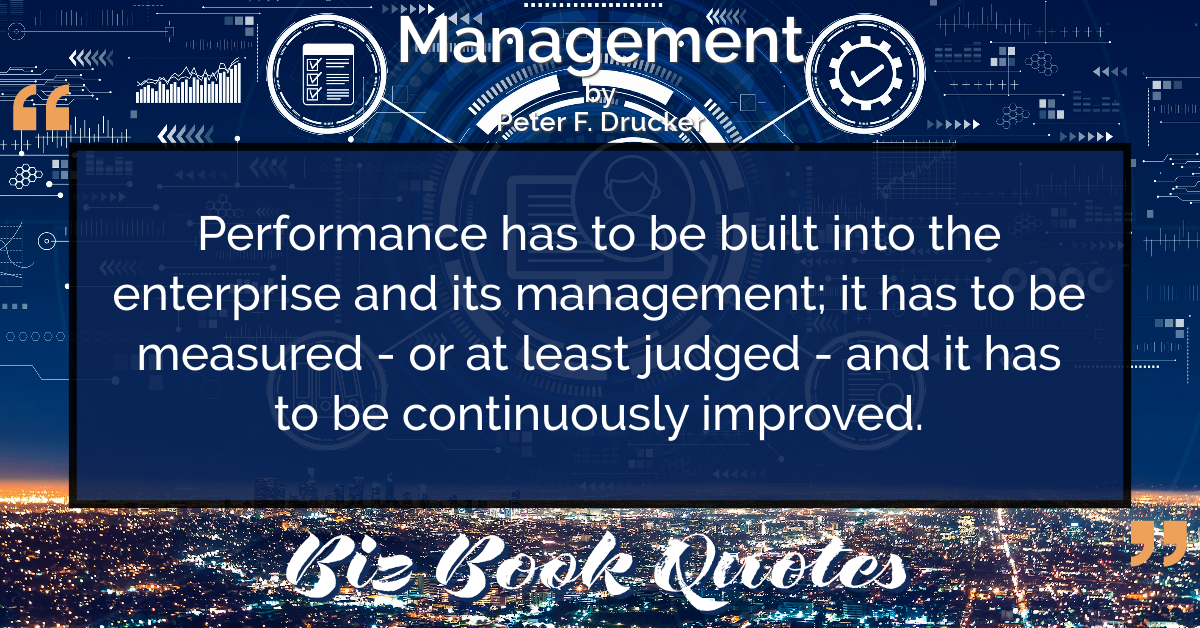 |
Performance has to be built into the enterprise and its management; it has to be measured – or at least judged – and it has to be continuously improved.
|
024 |