|
|
Time Smart:
By focusing our attention in the present, we become sensitive to existing pleasures, increasing time affluence in the process.
|
048 |
|

|
Time Smart:
…giving up money to have more time isn’t always the loss it may feel like.
|
053 |
|

|
Time Smart:
Valuing time seems to stand little chance against the narcotic properties of cash.
|
070 |
|
|
Time Smart:
One way to beat back bad habits is by asking the small why question: Why am I doing this?
|
072 |
|

|
Time Smart:
Knowing why and when you engage in mindless activities can help you replace them with happier time.
|
074 |
|
|
Time Smart:
Intentions become powerful when we tie them to daily actions that take our time away.
|
079 |
|

|
Time Smart:
Static rewards – such as always treating yourself with the same restaurant meal each week for hitting fitness goals – will become demotivating over time.
|
080 |
|
|
Time Smart:
Research suggests that building in a bit of uncertainty about winning smaller versus larger prizes can boost commitment.
|
080 |
|
|
Time Smart:
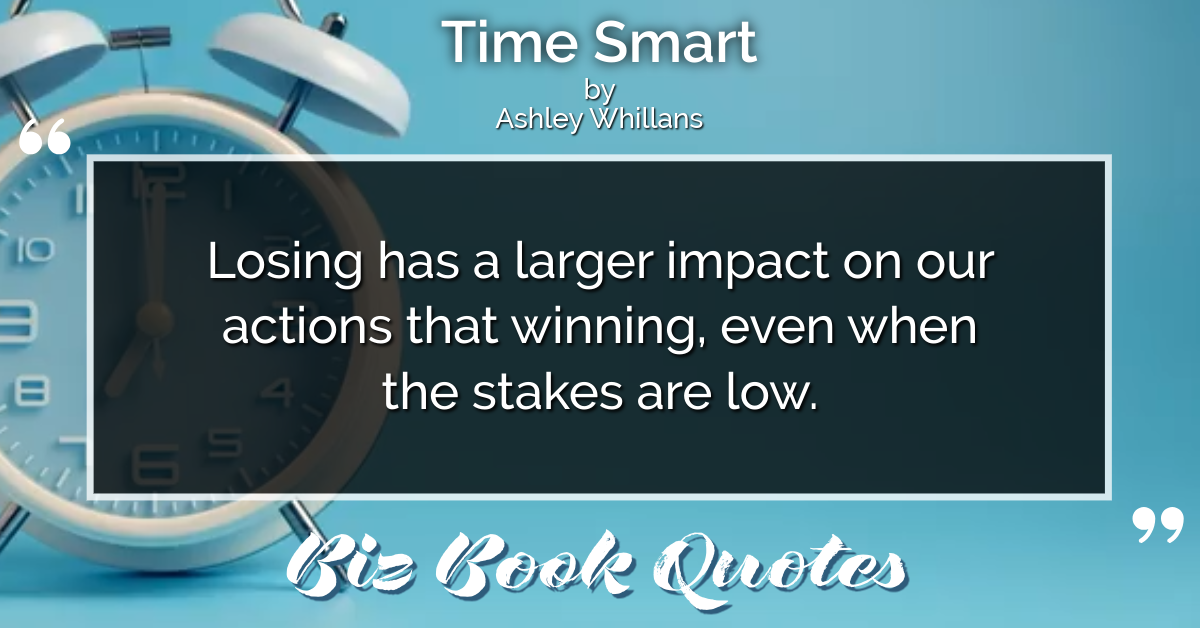
Losing has a larger impact on our actions that winning, even when the stakes are low.
|
080 |
|

|
Time Smart:
Public commitment to goals is highly motivating, as is public shaming.
|
081 |