|
|
The Other Side of Change:
Rumination is a common symptom of conditions like depression and anxiety, but anyone can fall into its trap from time to time.
|
065 |
|
|
The Other Side of Change:
…since rumination arises from zooming in too closely on a situation, one of the best ways to break free from it is to actively zoom out.
|
066 |
|

|
The Other Side of Change:
Because there can be uncertainty about whether a situation is actually dangerous… it can be better, in the long run, to overreact than to underreact.
|
067 |
|
|
The Other Side of Change:
When we’re stuck in rumination, a powerful first step is to stop and interrogate our assumptions.
|
068 |
|
|
The Other Side of Change:
When we ruminate, we build a mental prison for ourselves. Each repetitive thought lays down another brick, constructing walls that block out the world.
|
079 |
|

|
The Other Side of Change:
…neuroscience studies show that when we experience awe, activity in brain regions associated with self-focus decreases.
|
081 |
|
|
The Other Side of Change:
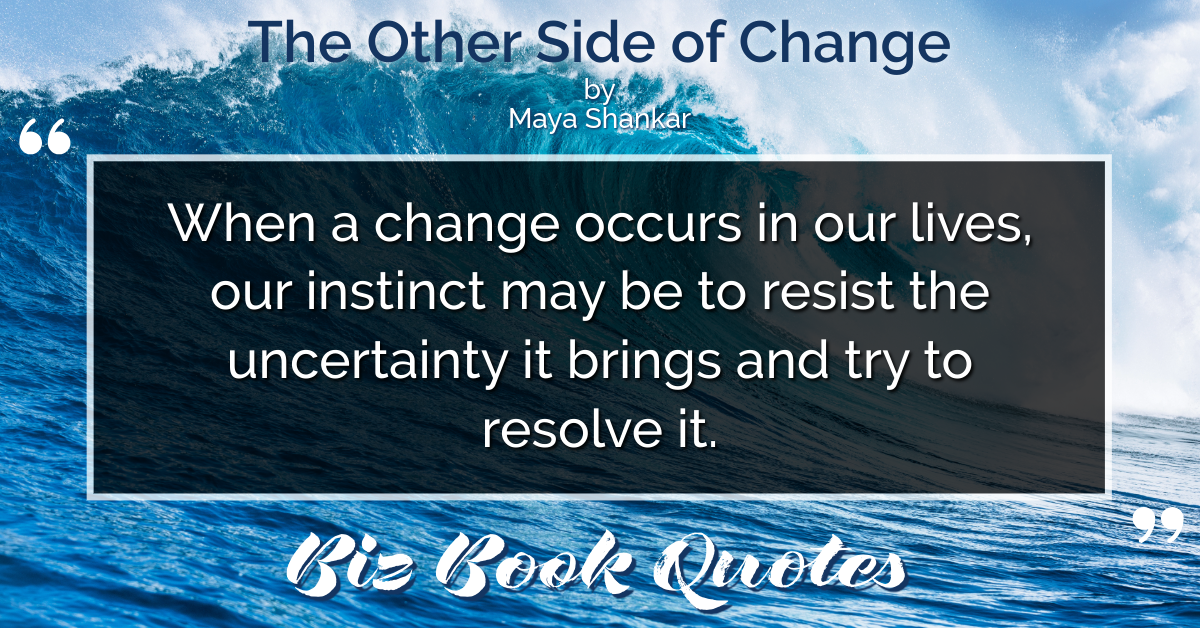
When a change occurs in our lives, our instinct may be to resist the uncertainty it brings and try to resolve it.
|
082 |
|

|
The Other Side of Change:
The strain that a major change puts on our relationships can often escape our notice initially.
|
094 |
|
|
The Other Side of Change:
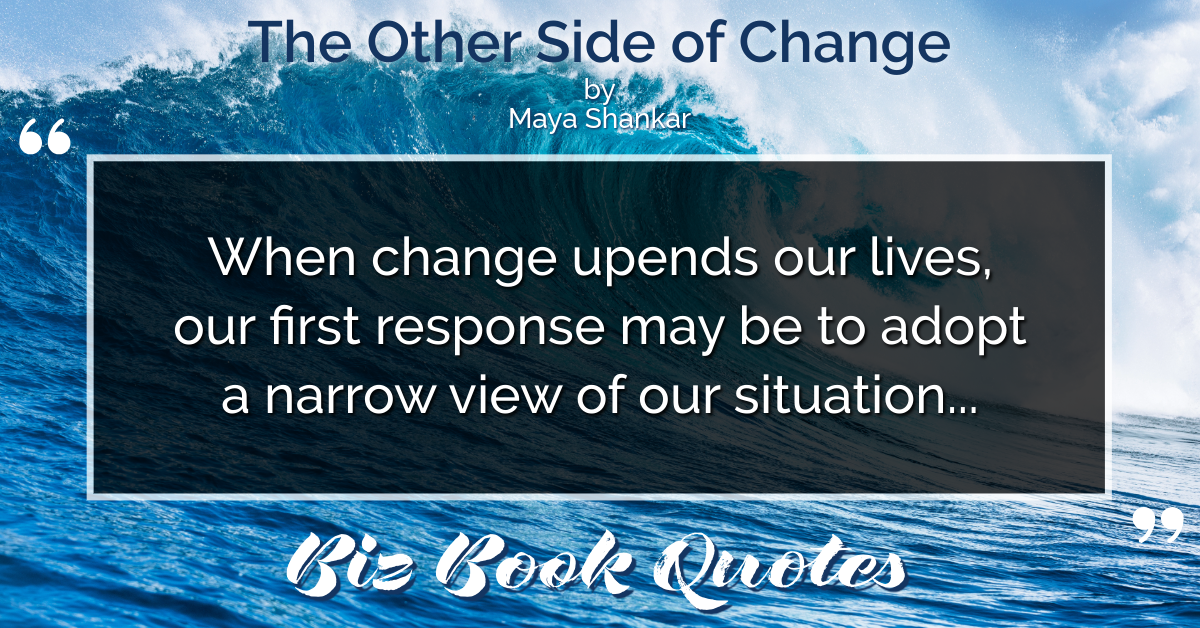
When change upends our lives, our first response may be to adopt a narrow view of our situation…
|
111 |
|

|
The Other Side of Change:
…change doesn’t have to limit us; it can also present an opportunity to expand our lives in ways that we may not have thought possible.
|
111 |