|
When we remove the barrier between socially acceptable and socially unacceptable uses of time, then people have control over their lives.
|
103 |
 |
When you force people to be at a specific place at a specific time every single day, they’re not going to give their best.
|
117 |
 |
As a result [of having control over their time] people take ownership of their work. They are being paid for results so they start behaving like entrepreneurs. They feel like they have a stake in the business.
|
122 |
 |
One of the ironies of a Results-only Work Environment is that when people have less time with one another they make those interactions more purposeful and meaningful.
|
125 |
 |
…in a Results-Only Work Environment… you end up playing fewer games with people; there is less political maneuvering and less time spent trying to make people happy in intangible ways.
|
128 |
 |
There are growing pains at first [in a Results-only Work Environment], but eventually people find out a way to both get what they need from their coworkers and respect their time.
|
129 |
 |
Most important of all, when you give people back their time they treat it preciously because they own it again.
|
132 |
 |
…having people not judge your use of your time and only judge your accomplishments is an amazingly liberating feeling.
|
144 |
 |
When your employees aren’t performing, talk to them. Find out why rather than focus on how hard they’re working or the amount of hours they’re putting in, focus on the work itself.
|
173 |
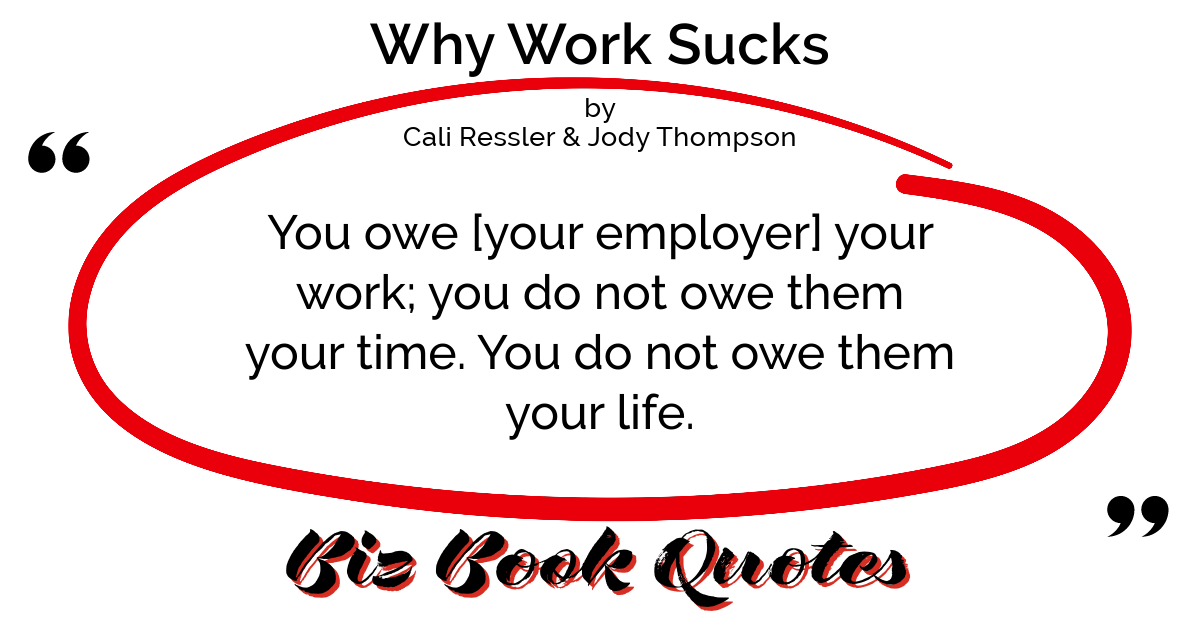 |
You owe [your employer] your work; you do not owe them your time. You do not owe them your life.
|
178 |