 |
In every new situation, we learn by recognizing patterns and associating this stimulus with things we’ve encountered before.
|
075 |
 |
Because we mostly fail to recognize the fears that are inevitably associated with change, we often end up unconsciously sabotaging our own efforts to change.
|
043 |
 |
If you are a leader or a manager, creating a new way of working begins with recognizing that renewal serves performance.
|
108 |
 |
…as long as leaders are unwilling to look honestly at themselves – to recognize their own fears and shortcomings – they can’t grow or change. The people they lead or manage also pay a price.
|
142 |
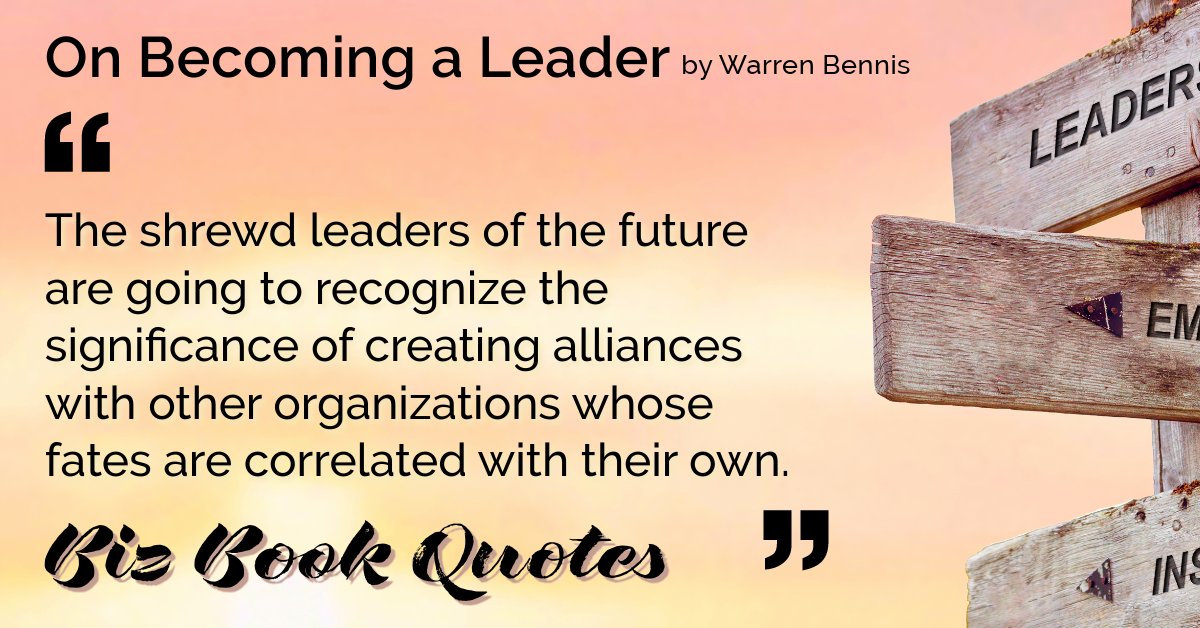 |
The shrewd leaders of the future are going to recognize the significance of creating alliances with other organizations whose fates are correlated with their own.
|
197 |
 |
The first step in becoming a leader, then, is to recognize the context for what it is – a breaker, not a maker; a trap, not a launching pad; an end, not a beginning – and declare your independence.
|
020 |
 |
In innovative learning, one must not only recognize existing contexts, but be capable of imagining future contexts.
|
071 |
 |
…once you recognize, or admit, that your primary goal is to fully express yourself, you will find the means to achieve the rest of your goals…
|
119 |
 |
As hard as it may be to recognize a player as one of our Worthy Rivals, especially if we find them disagreeable, to do so is the best way to become better players ourselves.
|
174 |
 |
…a truly strong person is someone that recognizes vulnerability is not a sign of weakness but is actually a sign of leadership.
|
133 |