 |
When you… look behind opposed positions for the motivating interests, you can often find an alternative position that meets not only your interests but theirs as well.
|
44 |
 |
In many negotiations… a close examination of the underlying interests will reveal the existence of many more interests that are shared or compatible than the ones that are opposed.
|
44 |
 |
A common error in diagnosing a negotiating situation is to assume that each person on the other side has the same interests. This is almost never the case.
|
49 |
 |
The most powerful interests are basic human needs. In searching for the basic interests behind a declared position, look particularly for those bedrock concerns that motivate all people…
|
50 |
 |
As fundamental as they are, basic human needs are easy to overlook. In many negotiations, we tend to think that the only interest involved is money.
|
50 |
 |
To sort out the various interests of each side, it helps to write them down as they occur to you. This will not only help you remember them, it will also enable you to improve the quality of your assessment…
|
51 |
 |
As long as you do not seem to imply that the other side’s interests are unimportant or illegitimate, you can afford to take a strong stance…
|
52 |
 |
You will satisfy your interests better if you talk about where you would like to go rather than about where you have come from…
|
54 |
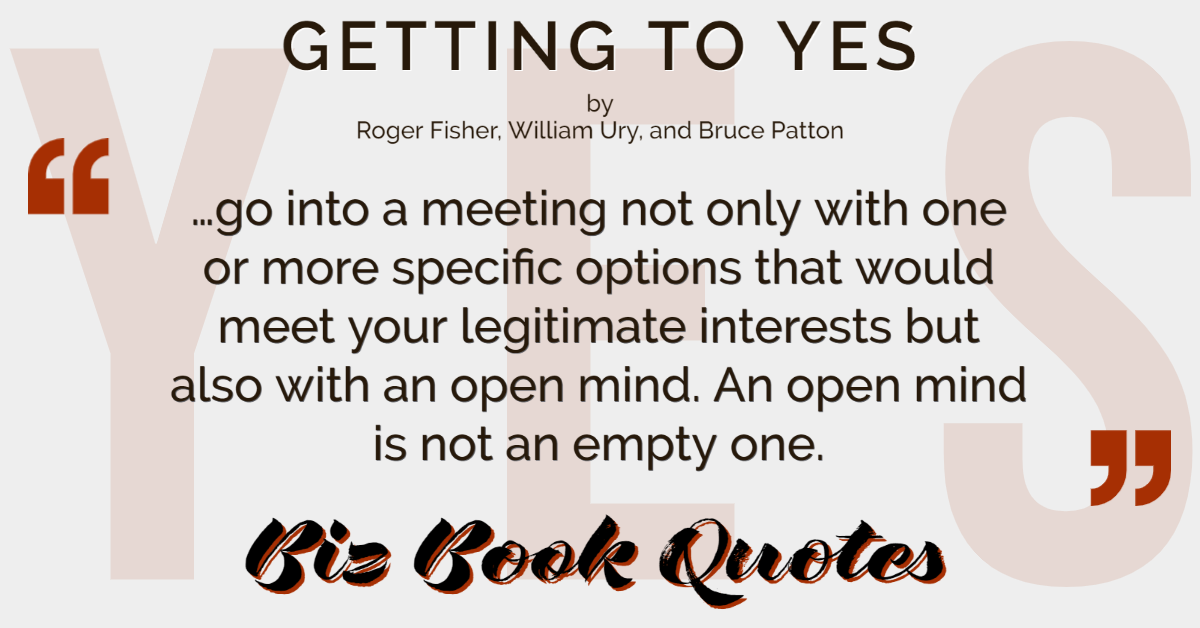 |
…go into a meeting not only with one or more specific options that would meet your legitimate interests but also with an open mind. An open mind is not an empty one.
|
55 |
 |
Often the wisest solutions, those that produce the maximum gain for you at the minimum cost to the other side, are produced only by strongly advocating your interests.
|
56 |