 |
Individuals and teams closest to the problem, armed with unprecedented levels of insights from across the network, offer the best ability to decide and act decisively.
|
219 |
 |
Problems arise when these [mental] models no longer reflect reality and when they inhibit creative thinking.
|
247 |
 |
We’re more tolerant of problems in things that we find attractive.
|
031 |
 |
…when we’re relaxed, our brains are more flexible and more likely to find workarounds for difficult problems.
|
031 |
 |
This is the fundamental problem with experienced people: we know too much.
|
089 |
 |
Poorly formed rocks are a root cause of many of the problems teams have with predictable delivery.
|
109 |
 |
Analysts must always reside in the idea that they are asserting and testing hypotheses about the problem they are trying to understand.
|
202 |
 |
…when used improperly, metrics are worse than lies, reinforcing our biases and hiding the real problems in our value streams.
|
228 |
 |
The fact that we get time wrong in corporate America may seem small, but those small moments add up to big problems for both employee and business.
|
017 |
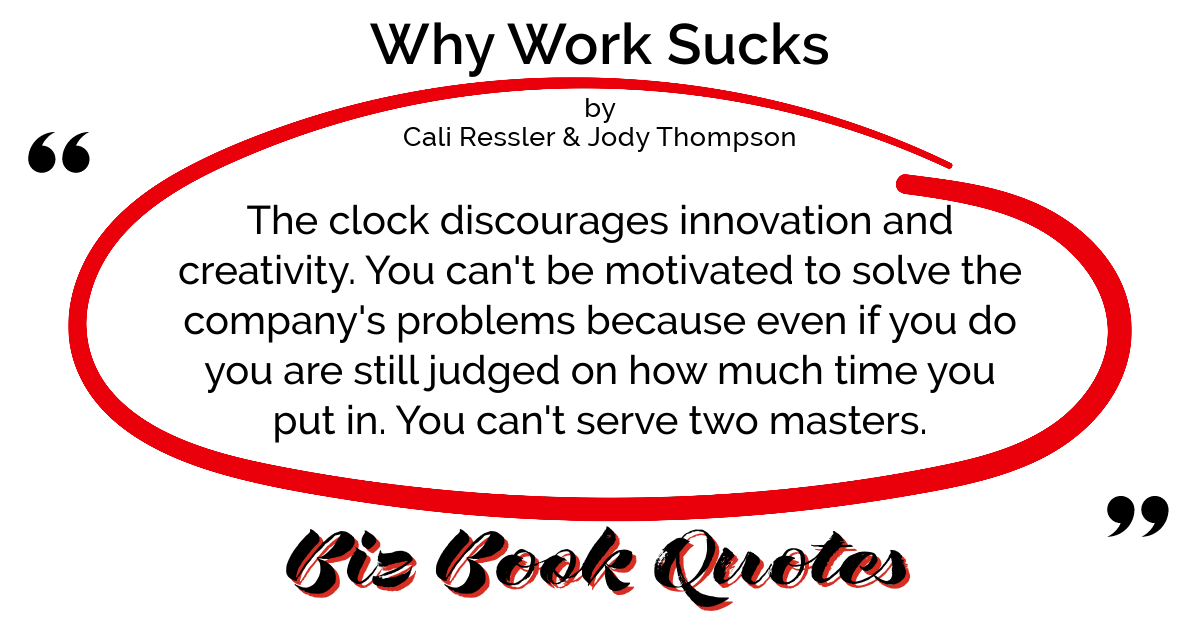 |
The clock discourages innovation and creativity. You can’t be motivated to solve the company’s problems because even if you do you are still judged on how much time you put in. You can’t serve two masters.
|
019 |