 |
When a leader is able to personally know everyone in the group, the responsibility for their care becomes personal. The leader starts to see those for whom they are responsible as if they were their own family.
|
144 |
 |
The larger the group of people we work with, the less likely we are to develop any kind of trusting relationships with them.
|
145 |
 |
If character describes how an individual thinks and acts, then the culture of an organization describes the character of a group of people and how they think and act as a collective.
|
163 |
 |
As members of a tribe who want to feel like we belong and earn the protection and support of the group, we will often follow our leaders blindly with the belief (or hope) that it is in our interest to do so.
|
189 |
 |
It is the group of people with whom we find common interest and common cause that we turn to for support.
|
276 |
 |
Leadership, true leadership, is not the bastion of those who sit at the top. It is the responsibility of anyone who belongs to the group.
|
288 |
 |
As employees or members of the group, we need the courage to take care of each other when our leaders don’t. And in doing so, we become the leaders we wish we had.
|
22 |
 |
When we believe that those inside our group… will look out for us, it creates an environment for the free exchange of information and effective communication.
|
29 |
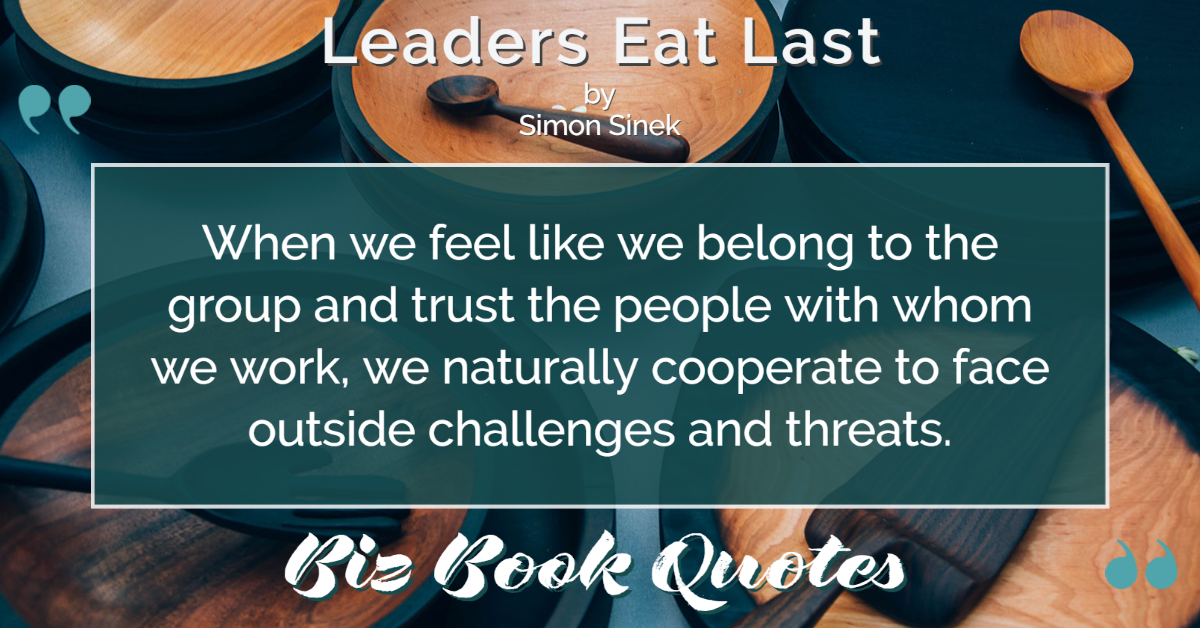 |
When we feel like we belong to the group and trust the people with whom we work, we naturally cooperate to face outside challenges and threats.
|
41 |
 |
Working exclusively to advance ourselves may hurt the group, while working exclusively to advance the group may come at a cost to us as individuals.
|
46 |