 |
Smart risks are based on wide and voracious data-gathering checked against a gut sense; dumb decisions are built from too narrow a base of inputs.
|
75 |
 |
Play equals trust, a space where people can take risks…
|
245 |
 |
…research show[s] that especially under conditions of risk and uncertainty, people are intensely motivated to make choices designed to avoid losing something of value…
|
244 |
 |
When a risky idea succeeds… the payoff is fantastic. But it’s the failures that, while painful, provide the greatest return on investment.
|
16 |
 |
Talking out loud is risky. Humans are social animals, and when our natural impulses to discuss and debate take over, time disappears.
|
135 |
 |
Working in smaller batch sizes increases velocity because they enable faster feedback, which reduces risk and waste.
|
80 |
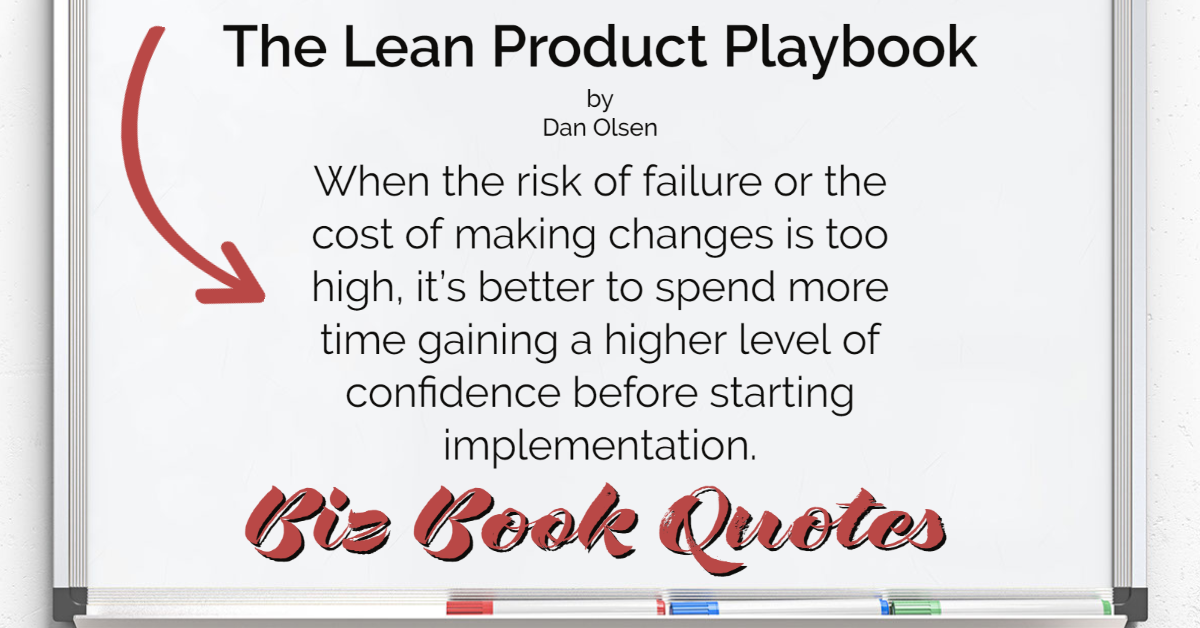 |
When the risk of failure or the cost of making changes is too high, it’s better to spend more time gaining a higher level of confidence before starting implementation.
|
204 |
 |
Innovation requires risks, people who are willing to think outside their boxes, perspectives from multiple silos, and more.
|
15 |
 |
Management-driven hierarchies are built to minimize risk and keep people in their boxes and silos. To change this more than incrementally is to fight a losing battle.
|
15 |
 |
Payside activity does have potential reward, but it also holds risk, and it’s hard work. This can thwart us – but we must not let it.
|
96 |