 |
…[the] phrase ‘Remind us…’ is useful, because most interviews include content the team has heard before, at some point or another.
|
77 |
 |
After interviewing the experts and organizing your notes, the most important part of your project should jump right out of your map, almost like a crack in the earth.
|
84 |
 |
Make sure potential interview candidates match your screening criteria. With only five interviews, it’s important to talk to the right people.
|
122 |
 |
One-on-one interviews are a remarkable shortcut. They allow you to test a façade of your product… But they also offer an important insight that’s nearly impossible to get with large-scale quantitative data: why things work or don’t work.
|
199 |
 |
When all you have is statistics, you have to guess what your customers are thinking. When you’re doing an interview, you can just…ask.
|
200 |
 |
Every interview draws you and your team closer to the people you’re trying to help with your product or service.
|
224 |
 |
Good interviewers excel at listening closely to what customers say, repeating statements to ensure understanding, and asking additional probing questions to illuminate the problem space.
|
37 |
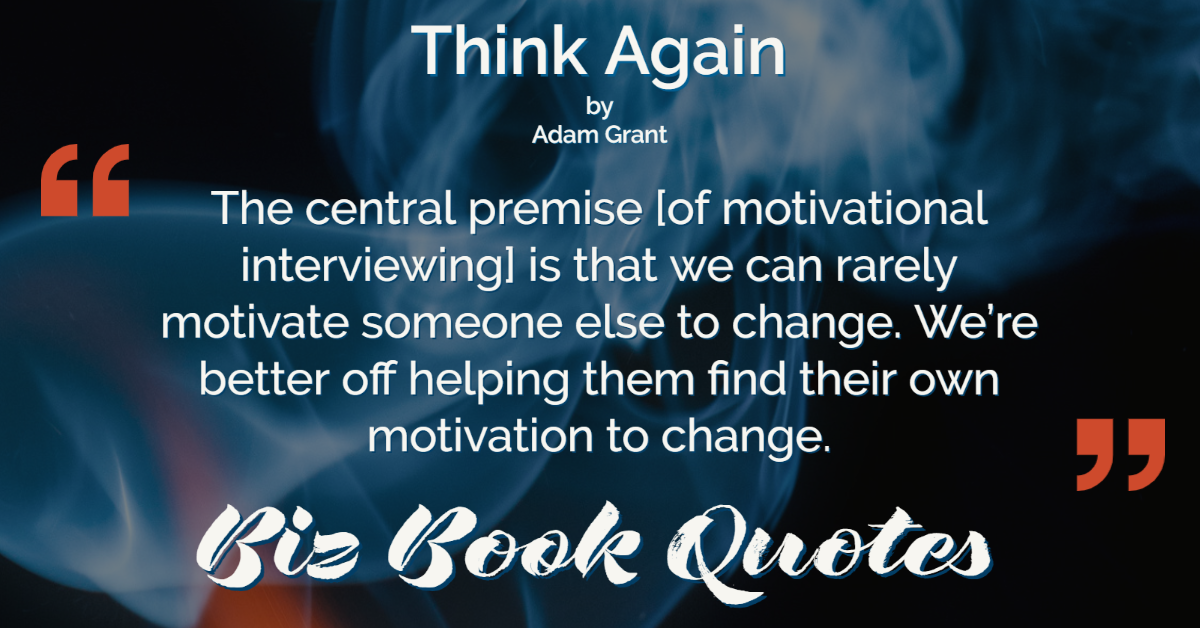 |
The central premise [of motivational interviewing] is that we can rarely motivate someone else to change. We’re better off helping them find their own motivation to change.
|
146 |
 |
One of the most overlooked strengths in America today can be expressed in one word: resilience. It’s invisible on resumes. It’s hard to spot in a brief interview.
|
21 |
 |
Highly structured interviews may not be as fun as a couple rounds of drinks at a speakeasy. But if a carefully scripted approach produces better results, it’s hard to argue against it.
|
221 |